
DressMe 2020 by Georgia Massari EXHIBITION CATALOGUE
Sep 05, 2020
by Georgia Massari
Curator MADS Gallery
Dorothy Fagan resides in rural Virginia, in the United States of America. Her art is powerful. She uses painting to release energy, imprint feelings and emotions on canvas. She uses a chakra-aligned palette that she applies on large size canvases. After visiting France and Italy, she starts to follow intuitive nudges and dreams to explore the intersection of mankind and divine.
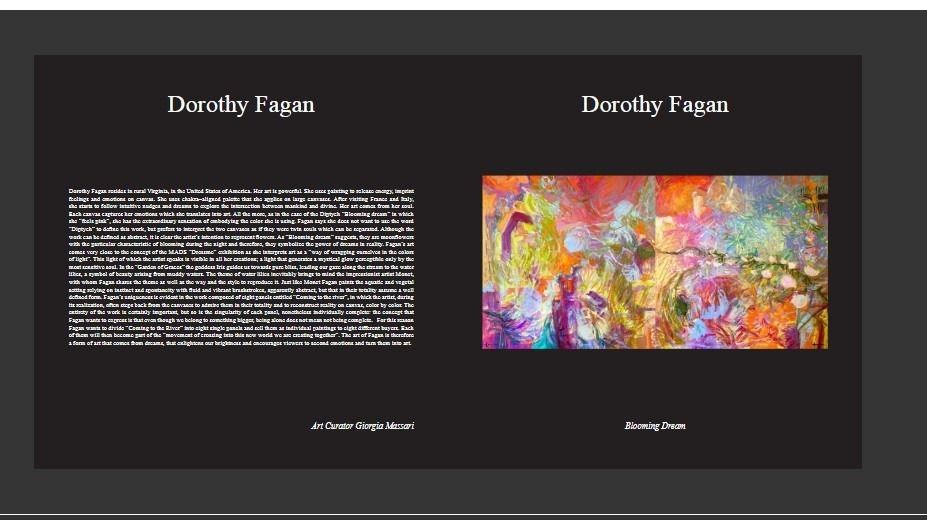
Her art comes from her soul. Each canvas captures her emotions which she translates into art. All the more, as in the case of the diptych, Blooming Dream, in which she "feels pink," she has the extraordinary feeling of embodying the color she is using. Fagan says she does not want to use the word 'diptych' to define this work, but prefers to think of the two canvas as if they were twin souls which can be separated.
Although the work can be defines as abstract, it is clear the artist's intention to represent flowers. As Blooming Dream suggests, they are moonflowers with the characteristic of blooming during the night and therefore, they represent the power of dreams in reality.
Fagan's art expresses the concept of MADS DressME exhibition, as she interprets art as a way of "wrapping ourselves in the colors of the light." The light of which the artist speaks is visible in all of her creations; a light that generates a most mystical glow perceptible by only the most senstive soul.
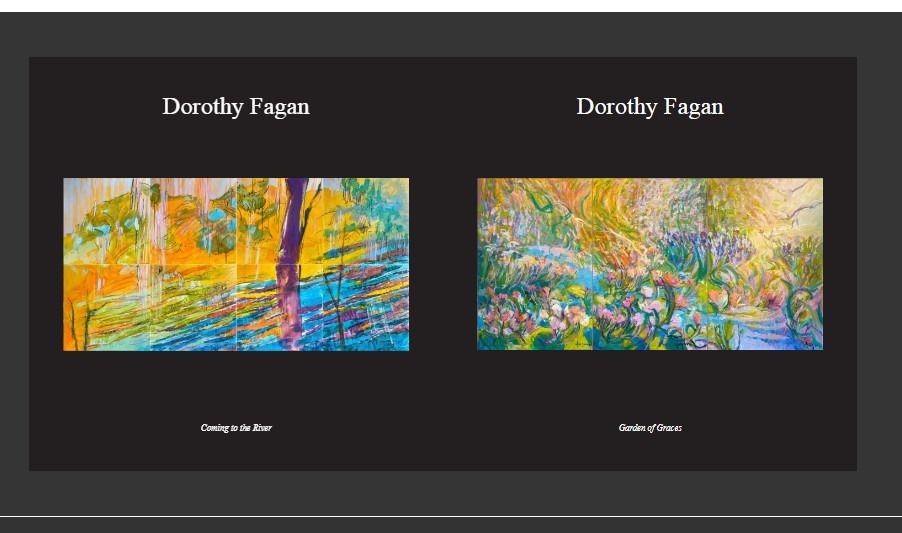
In the "Garden of Graces" the goddess Iris guides us toward pure bliss, leading our gaze along the stream to the waterlilies, a symbol of beauty arising from muddy waters. The theme of waterlilies inevitably brings to mind the impressionist artist Monet, with whom Fagan shares the theme as well as the way and style to reproduce it. Just like Monet, Fagan paints the aquatic and vegetal setting relying on instinct and spontaneity with fluid and vibrant brushstrokes, apparently abstract, yet in their totality assume a well defined form.
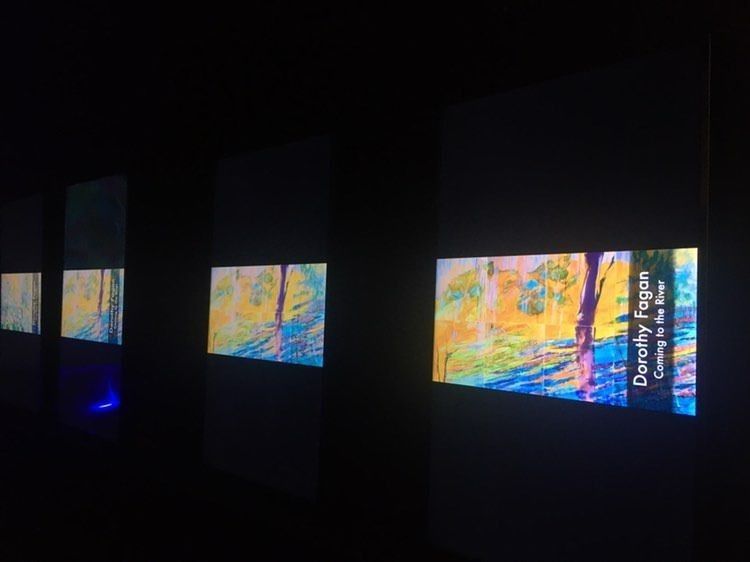
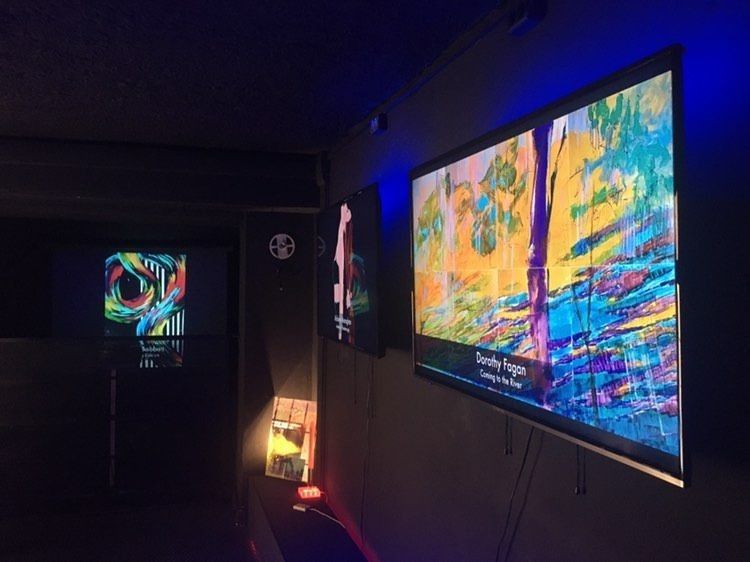
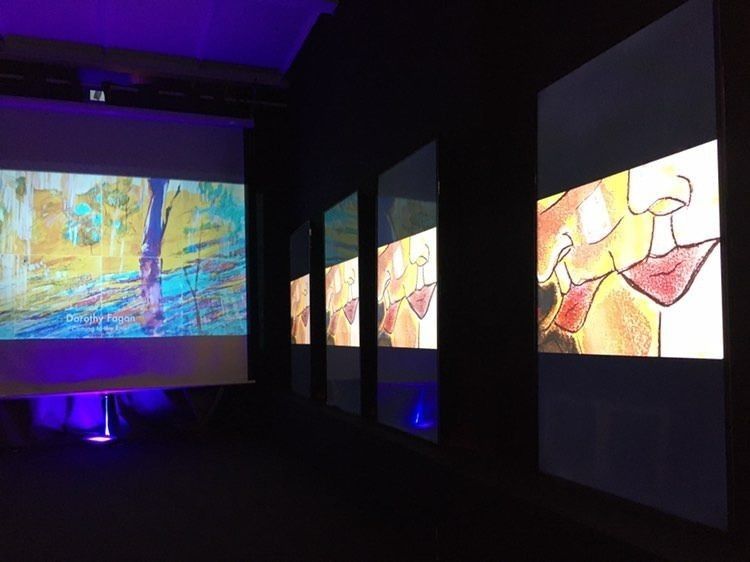
Fagan's uniquesness is evident in the eight paneled work entitled, "Coming to the River, The Crossing" in which the artist, during its realization, often steps back from the canvas to admire their totaltiy and to reconstruct reality on canvas, color by color. The entirety of the work is certainly important, but so is the singularity of each panel, nonetheless individually complete; the concept that Fagan wants to express is that even though we belong to something bigger, being alone does not mean not being complete.